
The Referral Already Happened. Your Website Still Has to Do Its Job.
Referrals have probably contributed to a lot of your success. You help your clients solve their biggest problems and rest easy at night, and they’re so excited they can’t wait to tell their friends.
A referral can be great for your firm. Someone that a prospect trusts has already said, “You should talk to them.” Then the prospect goes home, opens their laptop, and does what any person does when they’re about to trust someone with their financial life: they go check for themselves.
Within a few minutes, you have to convince them that the recommendation fits what they need. Maybe they heard that your firm specializes in helping business owners preparing to sell, and then they get to your site and see that you “provide personalized guidance through every stage of life.”
So, your referral is left to do all of the work. Your firm never sees the closed tabs, and you don’t get to see the new leads in a CRM if they’re not comfortable enough to reach out. They’ll just keep looking.
In this article, we’re going to talk about what referred prospective clients are looking to confirm, and how your website can help turn a trusted introduction into a call.
The Referral Gets You on the Shortlist
A referred prospect will usually look up both your firm and the advisors before doing anything else.
Maybe they skim the homepage, read a bio, leave, come back a few days later, and search the issue that prompted the referral. During that time, they’re checking whether the online version of the firm matches what they were told.
If the referrer said, “They really understand business owners preparing to sell,” the prospect probably expects to find some evidence of that. A relevant service page, article, or advisor bio can all help to reinforce that referral. Leaving it to broad language gives them less to work with and can make the referral feel less certain than it did in conversation.
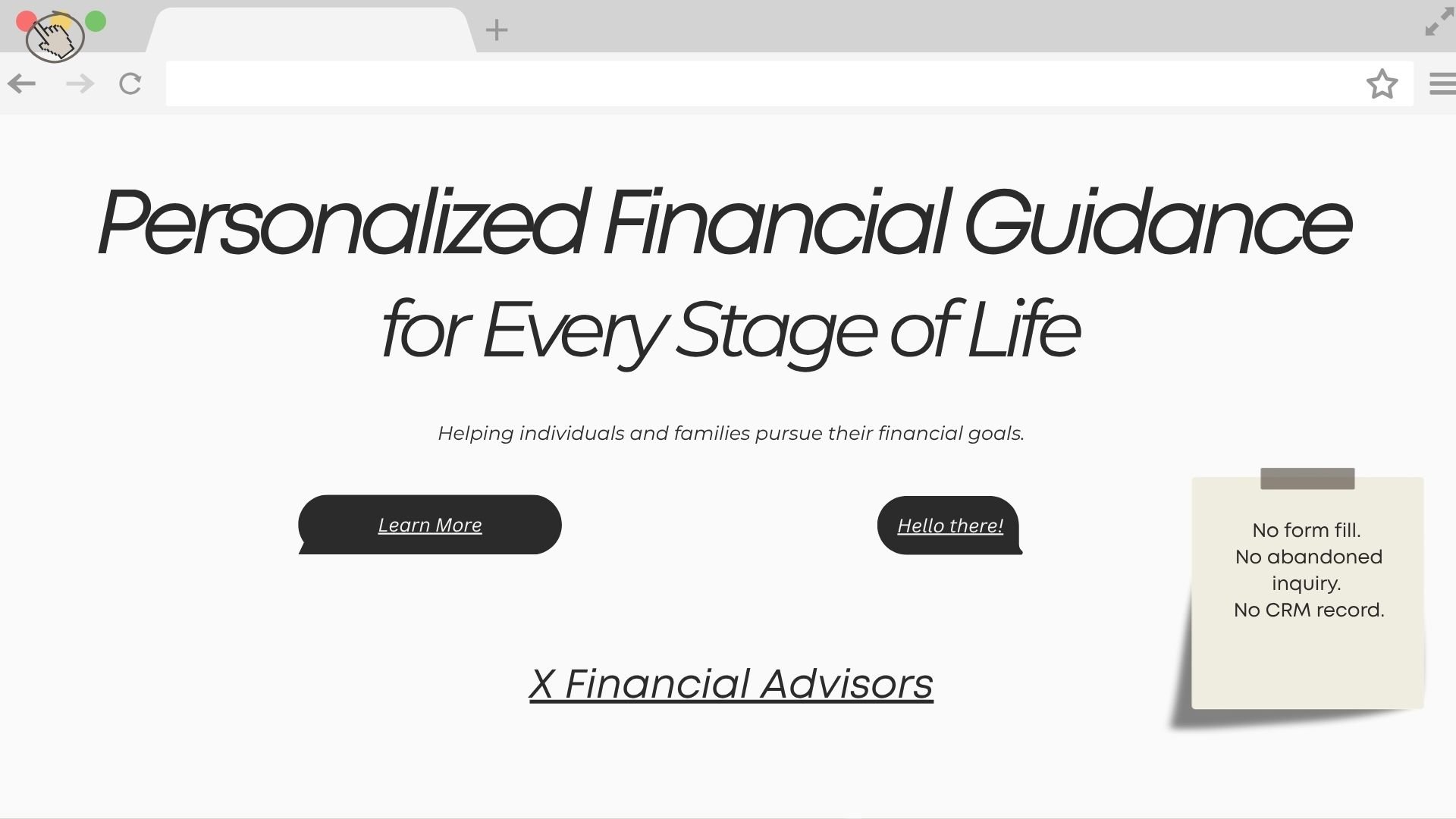
This entire process happens behind the scenes in most cases. Your firm doesn’t get a form fill, scheduled call, or even an abandoned inquiry. A referral brings the prospect closer, and the website has to give them enough reason to take the next step.
Can They See Themselves Here?
Your future client is looking for some sign that your firm understands the life they’re actually living. An executive nearing retirement is probably going to scan for something about equity compensation and career transitions. A business owner may look for succession planning or a future sale. Someone with several million dollars to invest may want to know whether the firm regularly handles that level of complexity.
When your home page only says the same industry-favorite lines that are on every other website, the prospect has to do the matching on their own. Many of them will just keep searching for a firm that speaks more directly to the situation that brought them there.
Specificity helps the right people recognize themselves quickly. A firm can speak clearly to business owners, physicians, or executives and still leave room for adjacent prospects who share many of the same needs. Your website should make the ideal fit easy to spot and give everyone else enough context to decide whether a future conversation makes sense.
Can the Website Back Up the Referral?
The referral may have been very specific: “They helped me sort out concentrated stock before retirement,” or “They really understand business owners getting ready to sell.” Once the prospect visits the website, they’re looking for proof that the firm actually does that work.
Having a relevant service page or article can confirm the recommendation pretty quickly. An advisor bio can help, too, especially when it explains the types of decisions that the advisor regularly handles, rather than stopping at credentials and years of experience.
What Happens After They Click “Schedule a Call”?
A prospect may be ready to talk and still hover over the button because the website has said almost nothing about what follows. No one wants to submit a form and find out they’ve accidentally signed up for a 14-step sales process.
Making sure to include a few plain details can remove that hesitation. Tell them who they’ll meet, what the first conversation covers, and how the firm decides whether there’s a fit. If there are asset minimums or other requirements, include them where people can find them before they spend time filling out the form.
Your website doesn’t need to document every stage of the client experience, but it needs to make the first step feel safe.
Make the Referral Sound Accurate
One of your clients might tell a friend, “They know your industry inside and out,” only for that person to land on a homepage about “helping families pursue their financial goals.” Suddenly, the client is being more specific about your firm than your own website.
And, it’s not like you don’t know what your firm does. You live and breathe these things. But it can be hard to translate that expertise into website copy that addresses what your future clients want to hear in a way they want to hear it. It can feel intimidating to be too specific, but then being too broad leads to you sounding the same as everyone else.
Listen to how clients and referral partners explain why they recommend you. Their wording will usually tell you the decisions your team handles exceptionally well and the parts of the experience that your clients remember. That’s what gives life to your service pages, advisor bios, home page, articles, etc.
How a Warm Referral Turns Into Another Open Tab
Referred prospects are usually lost in fairly ordinary ways. They get to your site with a reason to take the firm seriously, then are met with small signs that make that decision harder than expected:
The homepage could belong to almost any advisory firm.
The service they heard about takes three clicks to find.
The advisor bio lists credentials without explaining who that advisor helps.
The blog looks abandoned.
LinkedIn describes a specialty the website barely mentions.
The contact form asks for a full financial history before explaining what happens next.
Any one of those alone may seem minor, but together, they add work for someone who is already knee-deep in comparing options. The prospect may postpone the call, return to Google, or choose a firm that explains itself faster.
A good test is to enter your website through the page a referred prospect is most likely to find, then see how quickly you can locate the relevant service, the right advisor, and the next step. If you already know where everything is and still have to hunt, a first-time visitor has even less of a chance.

Give Them Something Useful Before They’re Ready to Call
A referral can put your firm on someone’s radar long before they’re ready to book a meeting. A business owner may still be years from a sale, or an executive may be sorting through stock options after a layoff. They have a reason to pay attention, but they’re still gathering information. What are you giving them in the meantime?
Maybe you have a series of articles that talk them through the steps where they’re at right now. Or, they might get a pop-up that invites them to join your email list in exchange for a free resource that guides them through something they’re struggling with — so they feel like they’re already getting to experience the benefit of working with you.
That same content may also be what brings them back when they search the issue on their own. Instead of disappearing after the first website visit, your firm is still part of the research process until the prospect is ready to have a conversation.
Put One Real Referral Through the Website
Choose a referral your firm would be genuinely excited to receive.
Say a 52-year-old executive has just been laid off and hears that your team can help with stock compensation, retirement accounts, and the move into whatever comes next.
Then follow the same path they would:
What would they type into Google?
Which page would they land on first?
How quickly would they see that your firm handles this kind of situation?
What would they read after that page?
Would they know what to do once they were ready to talk?
This exercise forces your website to answer a concrete set of questions, and reveals where useful information is buried and where the path ends.
Repeat the same review for the referral types your firm receives most often. You may find that one audience has a clear path through the site while another has to piece the firm together from a bio, an old article, and a service page that barely mentions their situation.
Help the Referral Finish the Job
A really strong referral gets your name into conversation. Your website helps the prospect decide whether to keep going.
When your firm’s site is built around the reasons clients recommend you, prospects can recognize the fit faster, find the service connected to their situation, and understand what reaching out would involve. The copy, advisor bios, service pages, and articles should all make the recommendation easier to believe.
I help financial firms turn that referral interest into website copy and content that gives prospects a reason to take the next step. Check out my financial website copy and content services, or contact me to talk about where your current site may be losing them.
FAQ
Do referred prospects really look at a financial advisor’s website?
Yes. A referral may be enough to get your name onto someone’s list, but many prospects still want to see who you serve, what you help with, and whether the firm feels relevant to their situation before reaching out.
What should a financial advisor website tell referred prospects?
Start with the questions that affect whether they contact you: who the firm works with, which problems it handles, what services are available, and what happens after someone schedules a call. The site should also support the specific reason people tend to recommend your firm.
Should an RIA website focus on a niche?
A clear specialty can help referred prospects recognize the fit faster. The wording can still leave room for people with similar needs who fall outside the firm’s primary niche, especially when the site explains the underlying problems the firm handles.
How can blog content support referrals?
Articles give prospects somewhere to go after the homepage. A useful post can answer the next question they have, show how the firm approaches a complicated decision, and bring them back later when they search the issue again.
Which website pages are most useful to referred prospects?
The homepage, relevant service page, advisor bio, and contact page usually do the most work. A strong article can also help when the referral is tied to a specific issue such as a business sale, concentrated stock, or retirement after a layoff.
How often should a financial firm update its website?
Review the site whenever the firm changes its services, audience, team, minimums, or contact process. It’s also worth checking older pages and articles at least once a year for outdated language, broken links, stale bios, and information that no longer reflects how the firm works.
